HDB Approved Dog Breeds in Singapore: Complete List and Rules
By PetBuddy.sg TeamPublished 3 October 2026Updated 16 October 2026
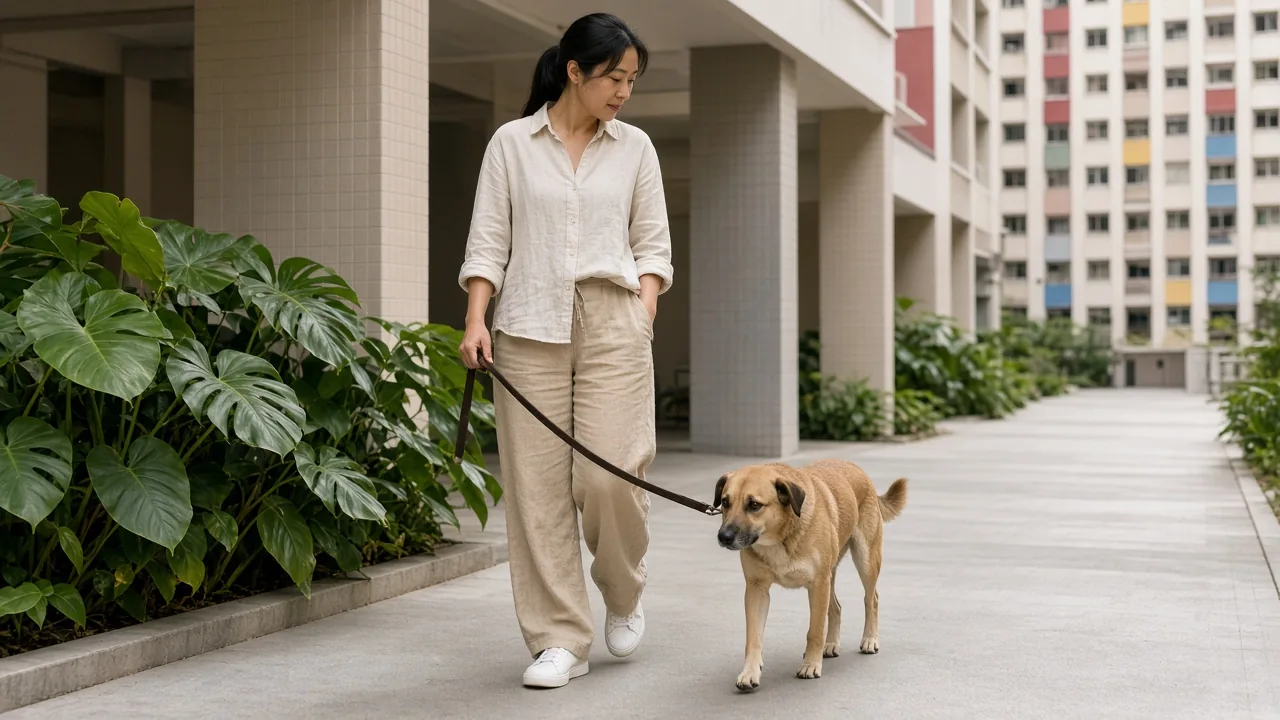
Found your breed? A vet can microchip your dog so you can apply for the AVS licence.
Thinking of getting a dog while you live in an HDB flat? Check whether that dog is allowed before you pay a deposit. HDB approved dog breeds are the 61 named breeds in the Housing and Development (Animals) Rules 2024, plus a cross of any two of those breeds. A flat may keep one of those dogs. Some other dogs qualify only through a rehoming scheme HDB publishes, such as Project ADORE.
The list below follows the Schedule to the Animals Rules 2024. HDB publishes the same 62 entries on its keeping pets page. We use the spelling in the Rules. HDB’s page currently writes “Griffon Bruxaellois” and “Shetland Sheep dog”; the Rules say Griffon Bruxellois and Shetland Sheep Dog. Confirm the live pages with HDB and AVS before you buy or adopt. The date we last checked them is the updated date at the top of this article.
Quick summary: HDB dog rules in Singapore
- One dog per flat. It must be a breed on the schedule below, or a dog adopted under a rehoming scheme HDB publishes.
- Item 62 is a cross of any two breeds in items 1 to 61. A mixed breed is not approved just because it is small.
- Project ADORE covers a local mixed-breed dog, a Singapore Special, up to 55cm in height. AVS no longer applies a 15kg weight limit. The dog still counts as your one dog.
- The Project ADORE K-9 scheme is separate: retired sniffer dogs of four named breeds, adopted through the K-9 units.
- A person with a disability who is registered with MSF may keep a trained assistance dog, including a breed outside the schedule, if HDB’s conditions are met.
- Any other dog, or a second dog, needs HDB’s prior written permission.
- Every dog still needs an AVS licence. First-time applicants complete the free online Pet Ownership Course. A licence is not HDB’s permission.
- Breaching the HDB rules can mean a fine of up to $4,000. Specified dogs are not allowed in HDB flats.
Complete list of HDB approved dog breeds in Singapore
Rule 3 calls a scheduled breed, or a dog adopted under a published rehoming scheme, an “applicable dog”. The schedule itself has 61 named breeds and one crossbreed entry. AVS also says no specified dog may be kept in an HDB flat. Those breeds are a separate list, covered further down.
| No. | Approved dog breed |
|---|---|
| 1 | Affenpinscher |
| 2 | Australian Silky Terrier |
| 3 | Australian Terrier |
| 4 | Bichon Frise |
| 5 | Bohemian Terrier |
| 6 | Bolognese |
| 7 | Brussels Griffon (also known as Griffon Bruxellois) |
| 8 | Bichon Havanese |
| 9 | Border Terrier |
| 10 | Boston Terrier (Lightweight or Middle weight) |
| 11 | Cairn Terrier |
| 12 | Cavalier King Charles Spaniel |
| 13 | Chihuahua |
| 14 | Chinese Crested Dog |
| 15 | Chinese Imperial Chin |
| 16 | Chinese Temple Dog (Classic or Miniature) |
| 17 | Coton de tulear |
| 18 | Czech Terrier |
| 19 | Dachshund (Light or Miniature) |
| 20 | Dandie Dinmont Terrier |
| 21 | English Toy Spaniel |
| 22 | Griffon Belge |
| 23 | German Hunting Terrier |
| 24 | Griffon Brabancon |
| 25 | Hairless Dog |
| 26 | Italian Greyhound |
| 27 | Jack Russell Terrier |
| 28 | Japanese Spaniel (also known as Chin) |
| 29 | Japanese Spitz |
| 30 | Lhasa Apso |
| 31 | Little Lion Dog |
| 32 | Lakeland Terrier |
| 33 | Maltese |
| 34 | Manchester Terrier |
| 35 | Miniature Pinscher |
| 36 | Miniature Schnauzer |
| 37 | Norfolk Terrier |
| 38 | Norwich Terrier |
| 39 | Papillon |
| 40 | Pekinese |
| 41 | Pomeranian |
| 42 | Poodle (Toy or Miniature) |
| 43 | Pug |
| 44 | Schipperke |
| 45 | Scottish Terrier |
| 46 | Sealyham Terrier |
| 47 | Shetland Sheep Dog |
| 48 | Shih Tzu |
| 49 | Silky Terrier |
| 50 | Small Continental Spaniel |
| 51 | Small English Terrier |
| 52 | Small Spitz |
| 53 | Smooth Fox Terrier |
| 54 | Toy Fox Terrier |
| 55 | Toy Terrier |
| 56 | Tibetan Spaniel |
| 57 | Volpino Italiano |
| 58 | West Highland Terrier |
| 59 | Wire-Haired Fox Terrier |
| 60 | Welsh Terrier |
| 61 | Yorkshire Terrier |
| 62 | Cross of any 2 breeds in items 1 to 61 |
A dog is not approved simply because it is small, quiet or sold as “apartment size”. Item 62 means both parent breeds are on the list. If the parentage is unclear, ask HDB or AVS before you commit. Do not rely on a seller’s description alone.
Popular HDB approved dog breeds to consider
Being on the list is only the first step. The notes below are general editorial observations, not a ranking and not a promise that a breed will suit your household. Individual temperament, health and the time you can give a dog matter as much as the breed name.
Maltese
The Maltese is a small companion dog with a long coat. Many people choose one for close company in a flat. That is a starting point for research, not a guarantee about the puppy in front of you.
Potential advantages
- Small size that can suit a flat, if the dog is trained and exercised.
- Often kept as a close companion.
- A practical option if you specifically want a smaller dog.
Things to consider
- The coat needs regular brushing and grooming.
- Some dogs bark a lot without training and enough company.
- Companion dogs still need daily attention, walks and veterinary care.
Toy or Miniature Poodle
The schedule allows a Toy or Miniature Poodle, not every Poodle size. Poodles are often quick to learn routines. Ask the breeder or shelter which size the dog is expected to be.
Potential advantages
- Toy and Miniature sizes are the ones named on the approved list.
- Often responds well to reward-based training.
- The coat may shed less visibly than some other breeds. No dog is completely hypoallergenic.
Things to consider
- Professional grooming is a regular cost.
- These dogs need mental stimulation as well as walks.
- Read up on breed-related health issues and ask a vet what screening is sensible.
Shih Tzu
The Shih Tzu is on the approved list and is often kept as an indoor companion. Coat care and a short muzzle are the practical points to plan for.
Potential advantages
- Small size.
- Often content with indoor company when exercised and socialised.
- Usually does not need the mileage of a working breed.
Things to consider
- The coat needs regular care unless you keep it short.
- A short muzzle can affect breathing and heat tolerance. Ask a vet what to watch for in Singapore’s weather.
- Eyes, teeth and skin are worth routine checks.
Chihuahua
Chihuahuas are among the smallest breeds on the list. Small does not mean low maintenance: they still need training, socialisation and safe handling.
Potential advantages
- Very small body size.
- Can live comfortably in a small home when handled gently.
- Grooming depends on the coat type.
Things to consider
- Some are vocal, or wary of strangers.
- Early socialisation and kind handling matter.
- Size does not remove the need for exercise, training or vet care.
Bichon Frise
The Bichon Frise is a small companion breed with a white coat that needs frequent grooming. Sociability depends on the individual dog and how it was raised.
Potential advantages
- Small companion breed on the approved list.
- Often enjoys people when well socialised.
- Suits owners who want interactive play rather than a large working dog.
Things to consider
- The coat needs frequent grooming.
- These dogs want company and a daily routine.
- Budget for grooming and ordinary veterinary costs over the dog’s life.
Can you keep a Singapore Special in an HDB flat?
Yes, if you adopt the dog under Project ADORE. AVS describes Project ADORE (Project on ADOption and REhoming of dogs) as the scheme for rehoming local mixed-breed dogs, commonly called Singapore Specials, into HDB flats. Under the Rules, a dog adopted from an animal welfare organisation under a rehoming scheme on HDB’s website is an applicable dog. It is still your one dog.
AVS allows a local mixed-breed dog up to 55cm in height. There is no weight limit: AVS says a previous 15kg cap was removed and that this was formalised in 2022. Only one dog is allowed in the residential unit. Read the current conditions on the AVS Project ADORE page before you apply to a shelter.
- Adopt through an AVS rehoming partner. AVS lists Action for Singapore Dogs, Causes for Animals (Singapore), Exclusively Mongrels, Mercylight Animal Rescue & Sanctuary Limited, SOSD Singapore and the SPCA.
- The dog must be licensed, microchipped, vaccinated and sterilised.
- You follow the Code of Responsible Behaviour, which includes not causing a nuisance to neighbours.
- You and the dog complete a mandatory obedience programme with an AVS-accredited certified dog trainer or an ADORE trainer.
Ask the welfare group whether that particular dog qualifies, and whether its energy level fits your household. Our guides to adopting a pet and pet charities in Singapore are a useful next read. A local mixed breed that is not adopted through the scheme is not approved by default.
Retired K-9 sniffer dogs
Project ADORE also includes a K-9 scheme for retired sniffer dogs. HDB and AVS list four breeds: Labrador, English Springer, Cocker Spaniel and Pointer. None of these is on the small-breed schedule. A Labrador from a pet shop or a breeder is not allowed in an HDB flat just because the breed appears here. Adoption is through drives run by the SAF Military Working Dog Unit, the SCDF K-9 Unit or the SPF K-9 Unit. The limit is still one dog in the flat.
Assistance dogs
The Rules allow one assistance dog for an “applicable lessee”: a person with a disability who is registered with the Ministry of Social and Family Development. An assistance dog is defined as a dog of any breed trained to assist that person. HDB’s keeping-pets page adds the practical conditions: the resident has a visual impairment, a physical disability and/or is deaf or hard of hearing; the dog is trained by an organisation verified by Guide Dogs Singapore or K9Assistance; and the dog is licensed by AVS.
This is not a general exemption for large breeds. If the dog is also a specified breed, check with both HDB and AVS first. AVS says no specified dog may be kept in an HDB flat, so do not assume the assistance-dog rule overrides that.
Do you need a licence for an HDB approved dog?
Yes. AVS requires every dog to be licensed, including approved breeds and Project ADORE dogs. You apply on PALS. First-time cat or dog licence applicants must complete the free online Pet Ownership Course before applying. AVS says the course takes about 20 to 30 minutes. The steps are on the AVS licensing requirements page, and our dog and cat licence guide walks through them without repeating the fee table here.
AVS is explicit that a licence is not approval to keep the dog at the address on the application. You still have to be allowed under HDB’s rules. The Rules themselves say the HDB limits do not replace the Animals and Birds Act licensing requirements. You need both.
- Confirm the breed is on the schedule, or that the adoption is under a scheme HDB publishes.
- Microchip the dog if it does not already have a chip. Project ADORE dogs must be microchipped, and the licence guide explains the chip number used on PALS. Find a vet if you still need the chip.
- Complete the Pet Ownership Course if this is your first cat or dog licence, then apply.
- Read the current conditions. AVS requires dogs to be leashed and properly supervised in public, and kept safe from falls at home.
- Keep the licence current, and update AVS if your address changes.
How many dogs can you keep in an HDB flat?
One. The Rules permit one dog only, whether it is a scheduled breed, a Project ADORE dog, a retired K-9 adopted under that scheme, or an assistance dog. Two small approved breeds are still two dogs. Keeping more than one dog needs HDB’s prior written permission. Do not assume that permission is routine.
The same flat may keep up to two cats. Cat licensing has its own rules, including a transition for cats you already kept before 1 September 2024. See cats in HDB flats. Private homes are different: AVS allows up to three cats or dogs, or a mix that totals three, and a condo’s by-laws can be stricter than that. Our condo pets guide covers what to ask before you move.
What if the dog is not an HDB approved breed?
Keeping a cat or dog other than in line with the Rules is an offence. The penalty is a fine of up to $4,000. HDB and AVS both state that figure. The Rules apply to owners and to tenants.
Specified dogs are regulated separately by AVS. The list includes Pit Bull types and crosses, Akita, Neapolitan Mastiff, Tosa, Dogo Argentino, Fila Brasileiro, Boerboel and Perro De Presa Canario in Part 1, and breeds such as the Bull Terrier, Doberman Pinscher, Rottweiler, German Shepherd Dog and mastiff types in Part 2. AVS says no specified dog may be kept in an HDB flat. Extra conditions for a specified dog in a private home — a muzzle, insurance and a banker’s guarantee — do not create an HDB exception. Those private-home conditions, and a separate fine of up to $5,000 for breaching them, are on the AVS specified dogs page.
If a breed is not on the schedule and the dog is not part of a published scheme, size and a seller’s assurance do not make it allowed. Rule 3 says you need HDB’s prior written permission. Get that answer before you commit.
How to choose a dog for an HDB flat
An approved breed is not automatically the right dog. Match the animal to your routine, your neighbours and the years of care ahead.
Time
Dogs need feeding, walks, training, company and vet visits. If you work long hours or travel often, decide who covers those hours before the dog comes home. Barking and unsettled behaviour are common reasons neighbours complain. A dog training plan helps, and Project ADORE adopters have a mandatory obedience programme.
Grooming and other costs
Food, grooming, vaccines, preventive care, supplies and unexpected treatment add up. Coat type changes the grooming bill more than the breed’s place on the list. Our guides to the cost of owning a pet and vet costs in Singapore are worth reading before you choose.
Neighbours and shared spaces
Teach the dog to settle at home, clean up after it, and keep it leashed where the rules require that. AVS expects dogs to be leashed and supervised in public. Lifts, void decks and corridors are shared. A permitted dog can still disturb neighbours if barking or mess in shared spaces goes unaddressed. Project ADORE’s code specifically asks adopters to prevent that.
Your household
If you have children or other pets, ask about the dog’s behaviour around them and supervise every meeting. Children need to be shown how to handle a dog gently. A breed description is a poor substitute for meeting the individual dog.
Adoption
Welfare groups can help you find a dog whose temperament and needs fit the flat, and they can say whether Project ADORE applies. Ask about health history, behaviour and HDB eligibility before you fall for a particular dog.
If you are unsure about a breed or a mixed-breed dog, verify it with HDB or AVS before you bring the dog home.
Found your breed? A vet can microchip your dog so you can apply for the AVS licence.